
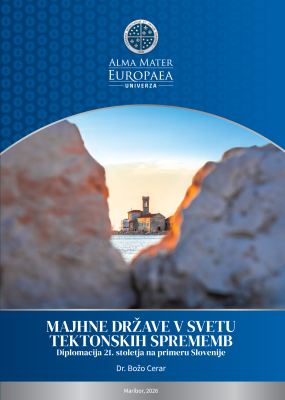
MAJHNE DRŽAVE V SVETU TEKTONSKIH SPREMEMB: Diplomacija 21. stoletja na primeru Slovenije
Synopsis
Small states live in a world that was not made for them. They lack systemic weight, do not set the rules of the game, and possess no strategic depth that would allow them to make mistakes. The world is changing rapidly, often without their consent, yet they remain part of the international system – exposed, vulnerable, and responsible for their own decisions.
In the book Majhne države v svetu tektonskih sprememb: Diplomacija 21. stoletja na primeru Slovenije (ang. Small States in a World of Tectonic Change: 21st-Century Diplomacy in the Case of Slovenia), diplomat Dr Božo Cerar explores how and why some small states nevertheless succeed. Drawing on decades of diplomatic experience – from the end of the Cold War and the breakup of Yugoslavia to the rise of the new Slovenian state – the author outlines fifteen principles according to which small states do not become great powers, but can become secure, influential, and credible. The book offers no illusions about the fairness of the world; instead, it presents a sober view of the international system, where rules are often applied selectively and power is once again returning to the forefront.
At a time when the multilateral order is fragmenting, neutrality is losing its protective role, the information sphere is becoming a battlefield, and artificial intelligence is accelerating both opportunities and risks, strategic orientation has become more important for small states than ever before. The book demonstrates why internal cohesion, professional diplomacy, a clear identity, alliances, and the ability to say NO at the right moment are crucial elements of their survival.
This is not a manual for moral posturing. It is a compass for a world without illusions. A book for diplomats, decision-makers, students of international relations – and all those who understand that smallness is not an excuse, but a condition that demands strategic maturity.
Downloads
References
 English
 Slovenščina